 I recently watched a documentary about what was the first civilization to form as such, with its own organization and writing system: the Sumerians. The documentary discussed the temple that was once dedicated to the goddess Nanna, the great Ziggurat of Ur, and you might be wondering what all this has to do with modern construction, and especially with the Covintec system. Well, it turns out that the great Ziggurat was built around 2000 BC using sun-dried mud bricks and reeds. Does that sound familiar?
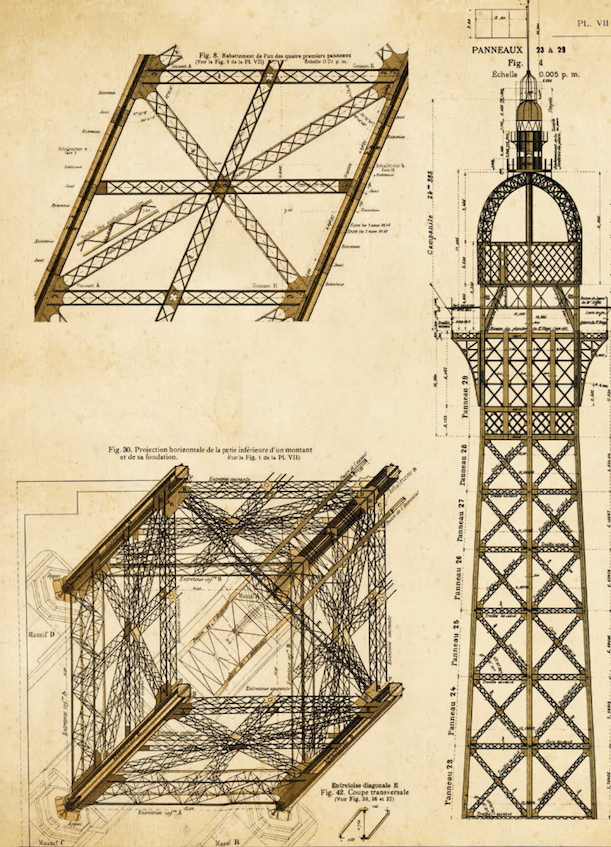 However, it is in the last 100 years that new construction systems have been most explored. This began with the Industrial Revolution, when enormous cast-iron structures began to be built in Europe, the Eiffel Tower being its most representative example. The main reason for its construction was to demonstrate the capabilities of metal construction. By the time of its inauguration (1889), Gustave Eiffel had been building various structures for more than 20 years; one of them, incidentally, is located in Mexico (the Tuxpan metal bridge or the old iron structures in Ecatepec).
However, while the main criticisms of the Eiffel Tower came from intellectuals who considered it a visual abomination, there were also serious questions regarding its structural integrity. Although Eiffel's calculations were accurate, the limitations of iron construction, not being widely understood, generated enormous skepticism among the population.
 I mention this story as a paradigm shift because today no one would question a building constructed with a metal frame; on the contrary, it's recognized as an extremely safe structure. However, it took many years and hundreds of tests, both in the laboratory and in the field against natural disasters, for people to become familiar with this system and accept it for what it is: an excellent building option.
In Covintec We find ourselves at a point very similar to the one Eiffel faced more than 100 years ago: the paradigm barrier. Especially in Mexico, where construction has historically been done with heavy masonry and solid slabs, introducing a lighter material automatically causes doubt and possible rejection if it is not carefully analyzed.
And when you're not immersed in construction, it can even seem counterintuitive that a lightweight system can achieve a load-bearing capacity equal to or greater than that of traditional heavy systems. But don't worry, we're going to explain exactly why. Covintec, Although lighter than traditional construction, it is much stronger.
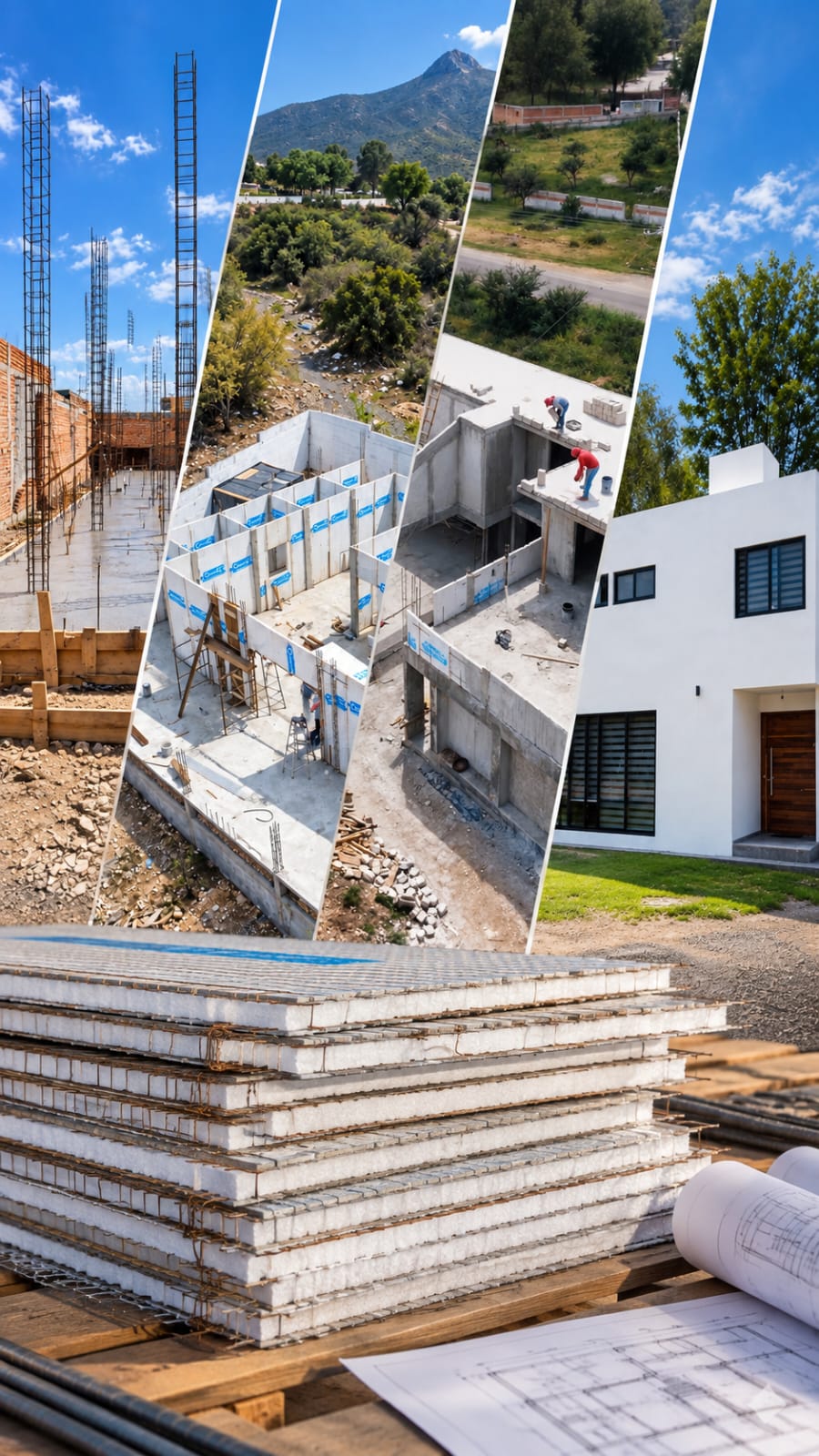
The secret of Covintec system It's based on the type of steel used in its structure and the spatial geometry of its reinforcement. Let me explain further: the strength of materials changes radically depending on how they are configured or assembled. That's why at Covintec we use a three-dimensional system based on continuous (Zig-Zag) reinforcements that form rigid triangles. Due to the nature of its geometry, this structure distributes loads uniformly in all directions, achieving a far more efficient use of the steel's mechanical properties.
Furthermore, this high-strength steel mesh is coated on both sides with a mortar or plaster with a minimum recommended compressive strength of f'c = 100 kg/cm² (or higher according to structural calculations). This contrasts favorably with many commercial concrete blocks, whose industrial manufacturing processes involve variations in their cement and sand ratios.